
%20--%3e%3csvg%20version='1.1'%20id='Layer_1'%20xmlns='http://www.w3.org/2000/svg'%20xmlns:xlink='http://www.w3.org/1999/xlink'%20x='0px'%20y='0px'%20viewBox='0%200%2030%2029'%20style='enable-background:new%200%200%2030%2029;'%20xml:space='preserve'%3e%3cstyle%20type='text/css'%3e%20.st0{fill-rule:evenodd;clip-rule:evenodd;fill:%23FFFFFF;}%20%3c/style%3e%3cg%20id='Symbols'%3e%3cg%20id='Footer'%20transform='translate(-468.000000,%20-360.000000)'%3e%3cg%20id='Group-5-Copy'%20transform='translate(468.000000,%20360.000000)'%3e%3cpath%20id='Fill-1'%20class='st0'%20d='M17.1,26.8h9.3c0.2,0,0.4-0.2,0.4-0.4V2.6c0-0.2-0.2-0.4-0.4-0.4H2.6c-0.2,0-0.4,0.2-0.4,0.4%20v23.8c0,0.2,0.2,0.4,0.4,0.4h12.3v-8.2h-3.3c-0.6,0-1.1-0.5-1.1-1.1s0.5-1.1,1.1-1.1h3.3v-4.8c0-2.3,1.8-4.1,4.1-4.1h3%20c0.6,0,1.1,0.5,1.1,1.1S22.6,9.7,22,9.7h-3c-1,0-1.9,0.8-1.9,1.9v4.8h3.3c0.6,0,1.1,0.5,1.1,1.1s-0.5,1.1-1.1,1.1h-3.3V26.8z%20M26.4,29H2.6C1.2,29,0,27.8,0,26.4V2.6C0,1.2,1.2,0,2.6,0h23.8C27.9,0,29,1.2,29,2.6v23.8C29,27.8,27.9,29,26.4,29L26.4,29z'/%3e%3c/g%3e%3c/g%3e%3c/g%3e%3c/svg%3e)

%20--%3e%3csvg%20version='1.1'%20id='Layer_1'%20xmlns='http://www.w3.org/2000/svg'%20xmlns:xlink='http://www.w3.org/1999/xlink'%20x='0px'%20y='0px'%20viewBox='0%200%2030%2030'%20style='enable-background:new%200%200%2030%2030;'%20xml:space='preserve'%3e%3cstyle%20type='text/css'%3e%20.st0{fill:none;stroke:%23FFFFFF;stroke-width:2;stroke-linecap:round;stroke-linejoin:round;}%20.st1{fill:none;stroke:%23FFFFFF;stroke-width:2.6;stroke-linecap:round;stroke-linejoin:round;}%20%3c/style%3e%3cg%20id='Symbols'%3e%3cg%20id='Footer'%20transform='translate(-568.000000,%20-360.000000)'%3e%3cg%20id='Group'%20transform='translate(569.000000,%20361.000000)'%3e%3cpath%20id='primary'%20class='st0'%20d='M20,22v-4.8c0-1.8-1.3-3.2-3-3.2l0,0c-1.7,0-3,1.4-3,3.2V22'/%3e%3cpath%20id='primary-2'%20class='st0'%20d='M26.4,28H1.6C0.7,28,0,27.3,0,26.4V1.6C0,0.7,0.7,0,1.6,0h24.9C27.3,0,28,0.7,28,1.6v24.9%20C28,27.3,27.3,28,26.4,28z%20M7.8,14v7.8%20M14,17.1V14'/%3e%3cline%20id='primary-upstroke'%20class='st1'%20x1='7.8'%20y1='8.5'%20x2='7.8'%20y2='8.1'/%3e%3c/g%3e%3c/g%3e%3c/g%3e%3c/svg%3e)
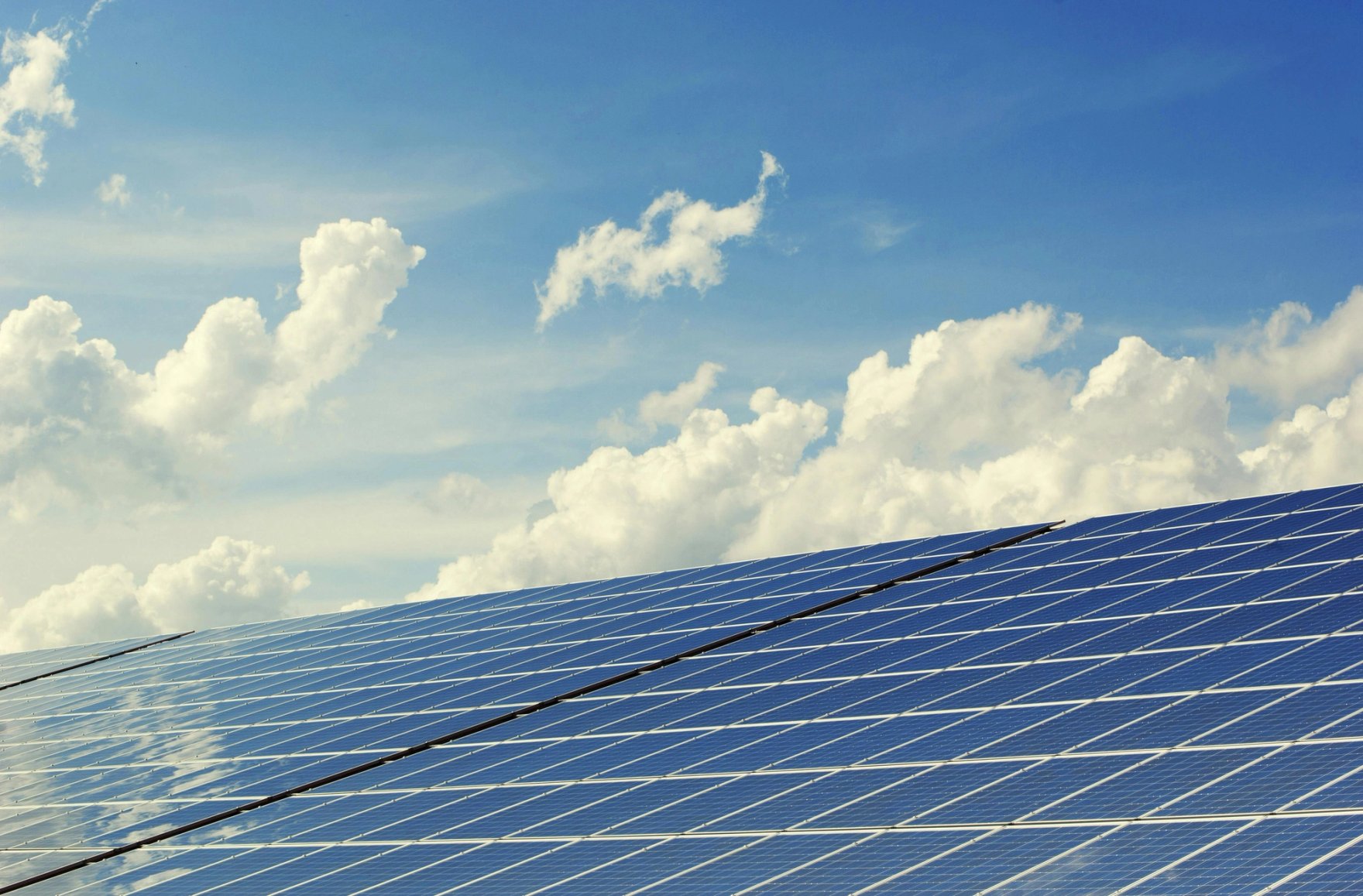
As 2026 unfolds, the global energy landscape continues to evolve at an unprecedented pace. Renewable energy is no longer a distant or theoretical solution, it is a present-day reality that is reshaping how electricity is generated, distributed, and consumed. From households and businesses to utilities and municipalities, clean energy has become an integral part of modern power systems.
Despite this progress, outdated misconceptions about renewable energy persist. Many of these myths were rooted in the early days of clean energy development, when technologies were less mature and deployment was limited. Today, however, the data tells a very different story. As we move forward, it is time to leave these misconceptions behind and align our understanding with the realities of today’s energy systems.
Myth: Renewables are too unreliable to support grid stability
2026 reality: Renewable energy is increasingly supporting reliable and resilient power grids.
Advancements in energy storage and grid modernization have significantly improved the ability of renewable energy to deliver consistent electricity. Battery storage allows excess solar and wind power to be stored and dispatched when demand is high or generation is low, while smart grid technologies help balance supply and demand in real time.
Globally, energy investment trends reflect growing confidence in renewable reliability. Despite some domestic stalling, nearly two-thirds of total global energy investment in 2025 was directed toward clean energy technologies. This shift underscores a broad recognition that renewables are not only viable, but essential components of stable, diversified energy portfolios.
Myth: Renewable energy remains prohibitively expensive
2026 reality: The economics of clean energy have fundamentally changed.
The notion that renewable energy, particularly solar, is financially out of reach no longer reflects reality. While upfront costs have not disappeared entirely, they have declined dramatically over the past decade. Solar costs have fallen by approximately 90% over the last ten years, while the cost of wind energy has dropped by roughly 70% over the same period.
Importantly, when evaluated over the full lifecycle of an installation, residential solar often costs less than traditional energy sources such as natural gas. Even without incentives like the federal solar tax credit, rooftop solar remains a cost-effective investment that can help households reduce electricity expenses and hedge against long-term utility rate increases.
Myth: Clean energy is only for sunny or windy regions
2026 reality: Renewable energy works across diverse geographies and climates.
While certain regions may be especially well-suited for solar or wind generation, renewable energy solutions are not limited to specific locations. Energy storage technologies, regional power sharing, and advanced grid infrastructure allow clean energy to be generated where conditions are optimal and delivered where it is needed.
These innovations enable communities in a wide range of climates to benefit from renewable power, regardless of local weather patterns. As a result, clean energy access is expanding well beyond traditionally “ideal” regions.
Myth: Renewables are driving up your energy costs
2026 reality: Renewable energy is helping stabilize long-term energy costs.
While energy prices have been up and down in recent years, these changes are largely driven by volatility in fossil fuel markets, supply chain disruptions, and geopolitical factors, not by the growth of renewable energy. Solar and wind generation rely on fuel-free resources, helping insulate them from the price fluctuations associated with coal, oil, and natural gas.
Renewable energy expansion contributes to price stability by lowering wholesale electricity costs during high generation periods. Distributed energy models like community solar further support this trend by reducing reliance on centralized, fuel-dependent power sources and easing grid congestion.
Myth: Solar is taking up valuable farming land
2026 reality: Solar and agriculture are increasingly coexisting.
The idea that solar development permanently displaces agricultural land overlooks the evolution of land-use practices. Across the country, solar projects are being designed to coexist with farming through approaches such as agrivoltaics, which allow crops, livestock grazing, and pollinator habitats to thrive alongside solar arrays.
In many cases, solar development provides farmers with an additional, stable revenue stream while preserving the long-term viability of their land. As land-use planning continues to evolve, solar is increasingly being viewed not as a competing use, but as a complementary one.
Myth: Renewables aren’t needed in our energy mix
2026 reality: Renewable energy is essential to meeting growing energy demand.
Global electricity demand continues to rise, driven in part by increased electrification and the rapid expansion of data centers and AI technologies.
Meeting this demand requires energy sources that are scalable, cost-effective, and reliable. Renewables play a critical role in meeting these needs. Distributed solutions, such as community solar, further enhance system resilience by diversifying where and how electricity is produced.
As energy systems evolve, renewables become a foundational component of a modern, resilient energy mix. Leaving these energy myths behind in 2025 means stepping into a future where renewable energy deployment isn’t just possible; it’s practical, economical, and fundamentally essential. From residential installations to utility-scale solutions and distributed generation, renewables are powering the demands of today while paving the way to continue meeting growing demand for years to come.